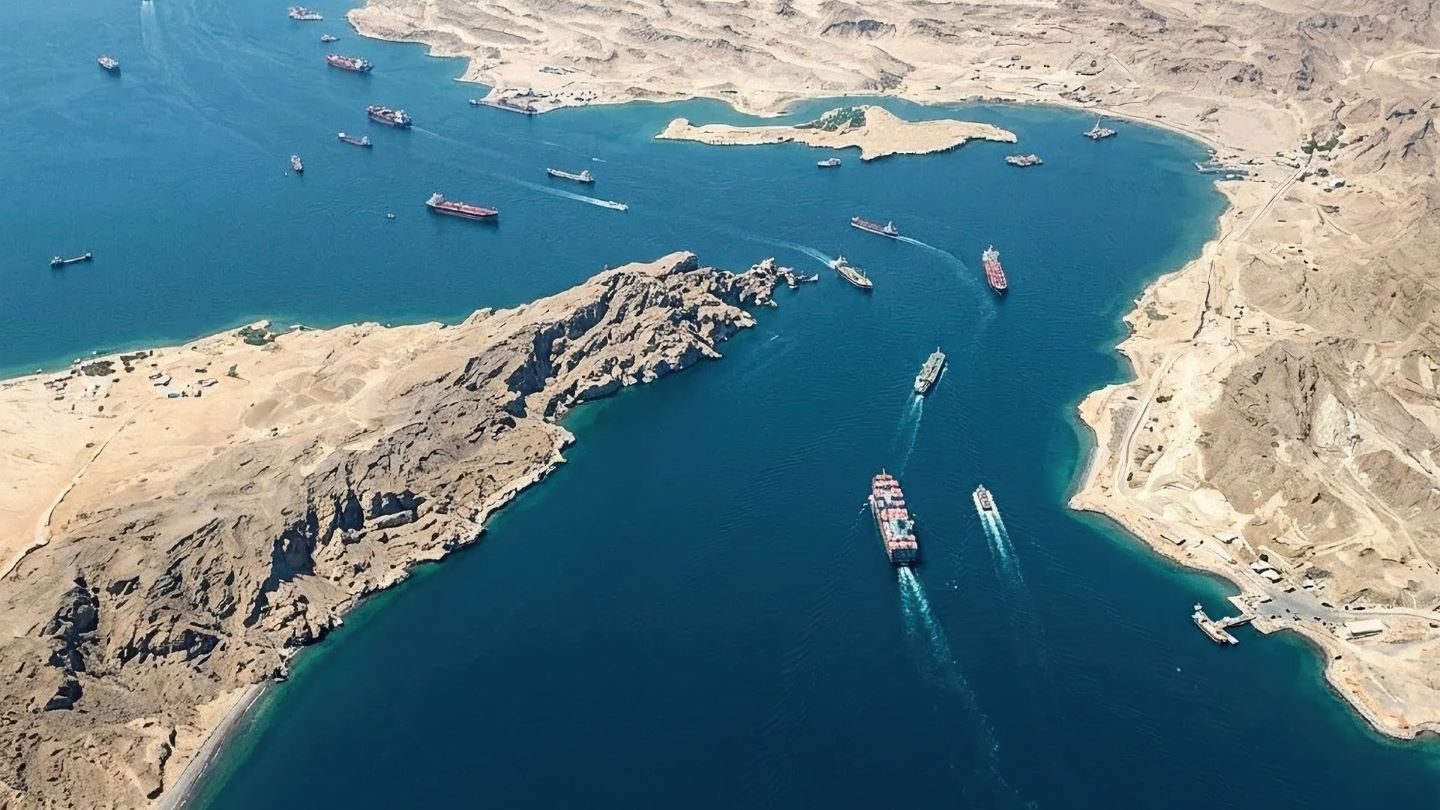
A new assessment from Howden Re says the crisis around the Strait of Hormuz is starting to “reshape” underwriting terms, pricing behaviour and risk appetite, even though the global reinsurance sector is still seen as able to withstand the pressure.
In its report, ‘Strait of Hormuz update: Market implications of an evolving risk landscape’, the broker outlines how ongoing instability in the Gulf has put marine hull war, cargo war, offshore energy and political violence business under heavy strain, while overall reinsurance capacity remains available.
Go deeper with GlobalData


Access deeper industry intelligence
Experience unmatched clarity with a single platform that combines unique data, AI, and human expertise.
Since the situation worsened, shipping volumes through the Strait have fallen sharply, Brent crude has risen above $100 a barrel and insurers have widened designated high-risk areas while lifting war-risk charges.
Howden Re Business Intelligence said worldwide oil trade movements have declined by more than 60% since the conflict intensified.
At the same time, diversions and added security precautions are continuing to interrupt supply routes and raise operating expenses.
The report describes stress in marine hull war, marine cargo war and political violence lines as “extreme”, citing attacks on vessels, energy installations and property, alongside sharp premium increases and rising uncertainty over how claims may develop.
It adds that recent losses have deepened concern in the market over aggregation exposure, multi-party liability and extended claims development, especially for marine and infrastructure-linked risks.
Even with losses increasing, the report says the broader reinsurance market is still in a position to absorb the impact.
Capacity in global treaty business remains plentiful, and pricing at the 1 April renewals was largely in line with the 1 January outcome, although reinsurers are watching inflation pressures and the risk of further weakening in marine and specialty claims.
Howden Re also said the disruption is already feeding into inflation-linked elements across key commodities, energy supply networks and construction costs.
Organisation for Economic Co-operation and Development growth projections have also been cut as economies respond to higher energy costs and concentrated supply exposure. This is affecting different sectors in different ways, from technology to consumer staples.
Howden Re marine, energy & political violence managing director Richard Miller said: “The Strait of Hormuz remains one of the most strategically significant maritime chokepoints in the world. Its positioning means disruption can quickly create rerouting pressures, timing lags and compressed supply chain resilience. The market reaction reflects a reassessment of geopolitical accumulation risk across marine, energy and political violence portfolios.”
He added: “War-risk pricing has reacted sharply, but the more important story is around sustained volatility, uncertainty of claims development and the pressure this places on specialty insurers already managing large recent losses, which includes the Baltimore Bridge loss.”