
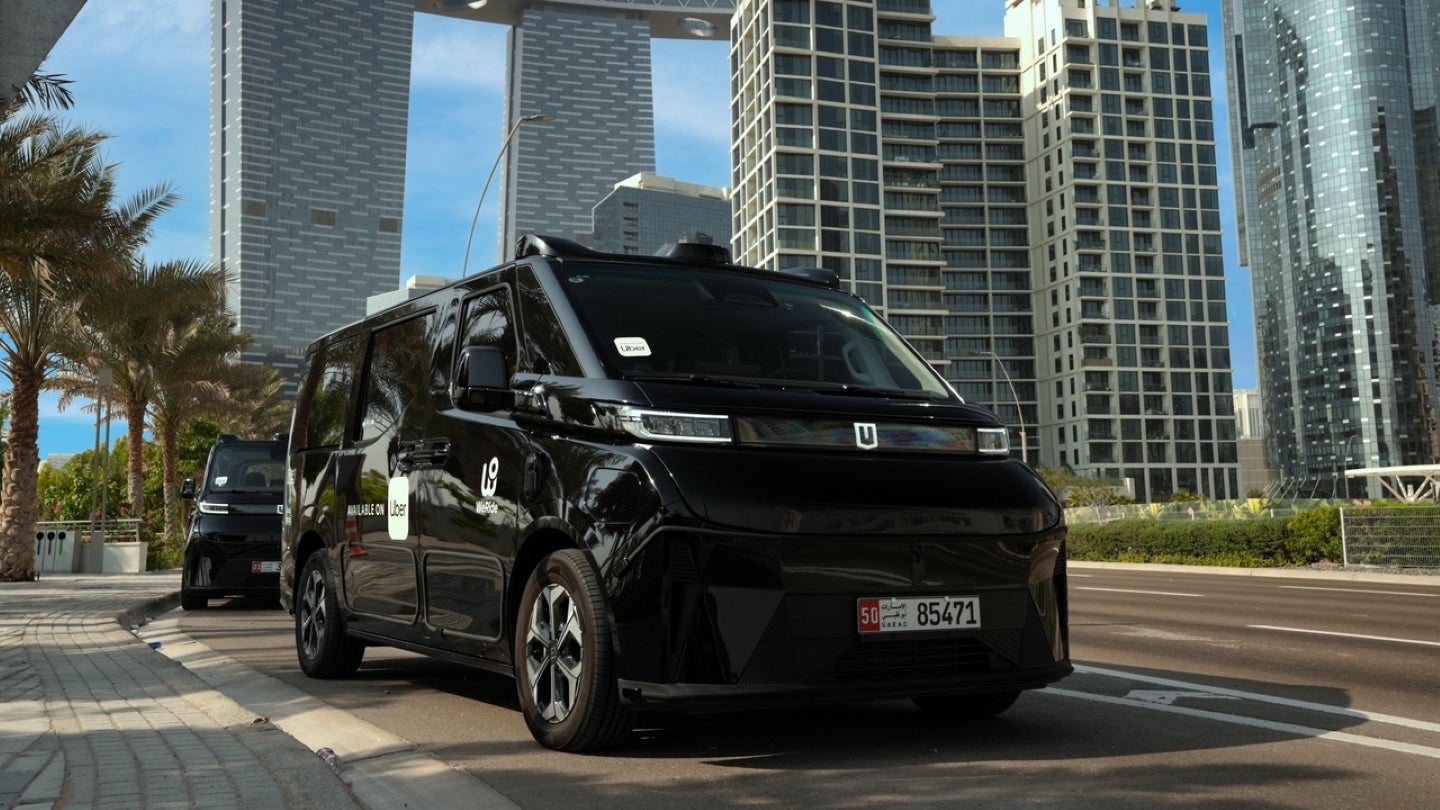
WeRide has appointed Allianz Insurance Singapore and Ping An Property & Casualty Insurance Company of China as the first partners in its new global insurance programme.
The initiative supports the worldwide commercial rollout of WeRide’s autonomous fleet.
Go deeper with GlobalData


Access deeper industry intelligence
Experience unmatched clarity with a single platform that combines unique data, AI, and human expertise.
The partners will co-develop bespoke coverage spanning the full lifecycle of Level 4 (L4) autonomous vehicle operations.
Policies will address motor, product, and commercial general liability, as well as privacy and cybersecurity risks under local regulations.
Designed for existing operations across China, Southeast Asia, and the Middle East, alongside future European expansion, the centralised framework aims to simplify administration, boost underwriting efficiency, and improve unit economics as fleets reach tens of thousands of vehicles.
In China and the Middle East, Ping An P&C has provided compliant coverage for Robotaxi services across Beijing, Guangzhou, Abu Dhabi, and Dubai, covering both the WeRide Go platform and third-party networks such as Uber and TXAI.
In Southeast Asia, Allianz Insurance Singapore is the primary partner.
WeRide CFO and international head Jennifer Li said: “Our partnerships with leading insurers reflect the strength of WeRide’s technology. Insurance is a critical part of the infrastructure needed to bring autonomous driving to scale globally, and this program strengthens that foundation as we expand into more markets.”
Allianz insured Singapore’s first fully driverless vehicle for the Sentosa Island Robobus deployment and later backed Grab-operated Robotaxis during the Ai.R trial in Punggol.
By October 2026, the Ai.R service had carried over 13,000 unique passengers and completed more than 135,000 autonomous kilometres.
WeRide manages an operational fleet of approximately 3,600 autonomous vehicles globally, including more than 1,800 Robotaxis across 13 countries and over 60 cities.
The company plans to bring on further underwriters, enter new regions, and refine sector-specific pricing mechanisms, actuarial models, and insurance protocols.